We were pleasantly surprised by the turn-out. This is, unfortunately, not a terribly well known subject among U.S. citizens and it was also the day following our screening of the Fallujah video and not everyone can make it out two nights in a row. But we still got close to a full house.
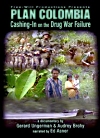
The film covers the military aid package signed by Clinton ostensibly aimed at eliminating the flow of drugs from Colombia to the U.S. It gives the history of the plan, first brought forth by the ex president of Colombia, Andres Pastrana, which was intended as a primarily social and economic development plan designed to resolve the ongoing civil war. Colombia was seeking aid from the international community for part of the plan's budget. The U.S. government's offer was primarily military aid, which in the end isolated Colombia from the rest of the international community. The budget fell short and the socio-economic emphasis of the original plan was replaced by a military approach.
U.S. companies got contracts for helicopters, contracts for aerial spraying of coca plants (and anything else that happened to be nearby), contracts for training the Colombian military.
Noam Chomsky makes two very insightful points in the film. He asks what right does the United States have to spray coca plants in Colombia and compares it to China spraying tobacco plants in North Carolina because of the health risks posed by smoking. Would this be accepted?
He also talks about a study of the most cost effective means for eliminating drug use in the U.S. He lists the various methods, in order of cost effectiveness, starting with drug prevention and treatment programs at home, by far the most effective. The least, which is where the U.S. puts most of its money, is source country control. It makes you wonder if fighting the war on drugs is what this is really about. In fact, cocaine production has steadily increased over the years.
We saw examples of the violence perpetrated on the Colombian people by both sides of the conflict, the leftist rebels and the para-military forces. We hear chilling accounts of attacks on villages, told by men and women who seem eerily accustomed to brutality and bloodshed.
Contrast this with discussions by lawmakers in the U.S. Congress whose primary concern seemed to be which state's industry would get the fat contracts for helicopters and other military equipment to be sold under the plan.
In fact, one thing we talked about in the discussion was how incredibly bad every U.S. official appeared in the film, with the exception of representative Jim McGovern and the late Paul Wellstone.
We also talked about what has happened since the film was produced. The failed Plan Colombia was renamed by Bush as the Andean Counterdrug Initiative and extended it to include other South American countries. Just this past November Congress voted for an additional USD 735,000,000 for the plan. Rep Jim McGovern introduced an amendment to reduce the amount by USD 100,000,000. It was voted down.
And then there are the recent murders in the San José Peace Community, first killing Luis Eduardo Guerra the leader of the community in February 2005 and then his successor in November.
One person pointed out an issue that was surprisingly missing from the film. There was little or no talk of CIA involvement in drug trafficking. Considering the well-known joke that CIA stands for Cocaine Import Agency, it was one aspect we expected to be covered in the film.
We talked about one possible solution to the problem, albeit practically impossible to implement, and that is the legalization of drugs. Many leaders have put forth this idea, however they also recognize that no one country or region alone can legalize drugs without being targeted by the U.S.
There are no easy answers. But it is certain that military aid in a country with an ongoing civil war is not the solution. And there are some things we can do. We can pressure our elected representatives to stop pouring money into the failed program and push for drug treatment and prevention plans.
First and foremost, of course, is to be informed on the issues, and this film certainly provides a great deal of information.
Stephanie Westbrook
Special thanks to Linux Club for their hospitality.
Our Eyes Wide Open Film Series is suspended; for further information click here.
Upshot of our Nov. 9th group discussion on current politics:
It wasn't the Russians that got us Trump. Or Comey. Or even the massive GOP election fraud. It was the DNC.* *Dem National Committee
To learn how to stop the DNC
from delivering us another Trump, read Autopsy: the Democratic Party in Crisis.
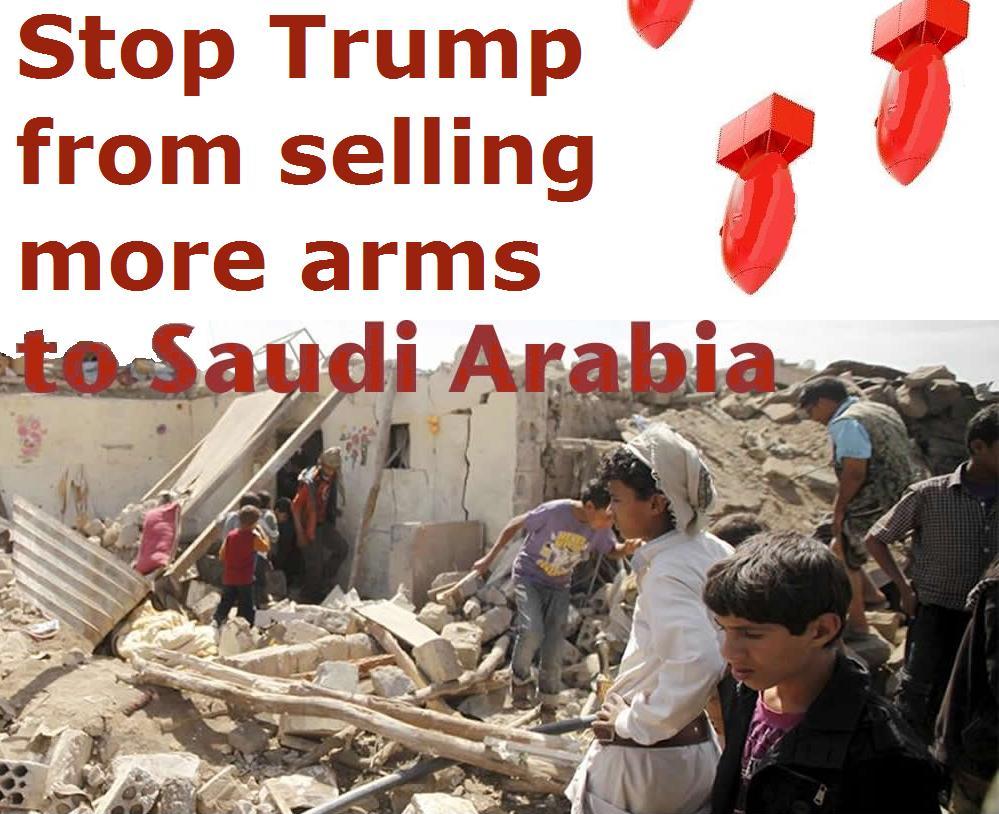
Photo of a school in Yemen bombed by Saudi Arabian jets supplied by the U.S. and fueled in the air by the U.S. Air Force.
Tell Trump to STOP THIS CARNAGE, not fuel it! Click here.
Also participate in the CodePink email and/or phone initiative:
Click here to sign a petition, to put an end to the sanctions against Syria - their only effect is to take a terrible toll on the population, causing them to migrate! And click here to see the video by the Italian Committee to lift sanctions against Syria.
Did someone tell you that U.S. military intervention in Iraq was over? Not true: we're at it again. This time the pretext to drop bombs is "curbing ISIS" (which was created by the U.S. in the first place, to overturn al-Malaki in Iraq and then Assad in Syria, and is now out of hand.
Like what happened to "our" creature al Qaeda in Afghanistan). And the death toll continues to rise...
Write your senators and tell them: "Enough! U.S. out!! Iraq has shown it can curb ISIS by itself!"
Mailing List
Stay informed
Join the USC4P&J mailing list to stay informed on events and initiatives.