Fallujah: The Hidden Massacre
Special screening in Rome
November 30, 2005
The atrocity of war is such that it might seem misplaced to get worked up about the use in Iraq of the chemical agent White Phosphorous – now officially confirmed by the Pentagon after the RAI News24 scoop last month made further denial impossible. [see the video]
In fact, the very RAI video screened last Wednesday (November 30th) at the Linux Club revealed to the USC4P&J members present, and to the large Italian crowd in the main room, not only the chemical horrors being committed by allied troops in Iraq, but also conventional horrors that dwarf the sadly famous scenes of the massacre of civilians in Vietnam, which the RAI video recalled at the beginning.
Yes, the pictures of Falluja civilians scorched to death in their beds by phosphorous mist, with their bedclothes still intact, were shocking. But the video then went on to show us other scenes from Iraq we would never have wished to see: for example, the corpses of tortured Iraqi prisoners, their bodies punctured with dozens of holes made by some maniac interrogator wielding an electric drill. Somehow the horror of the high tech deaths inflicted by refined phosphorous mists paled before the horror of the low tech deaths inflicted by a Black and Decker.
Thus, Sigfrido Ranucci and Maurizio Torrealta's implacable report, "La strage nascosta" ("The Hidden Massacre"), was in a certain sense counterproductive. "White phosphorous?" a cynic might ask (and one of the Italians present -- Stefano -- did); "so what? Is a 'Shake and Bake death' in your bed by white phosphorous any worse than a 'Black and Decker death' in a jail cell? When a nation accepts war, there are no longer any limits, high or low tech. Let's not waste time decrying this or that weapon. The only fight worth fighting is to put an end to war."
And yet I feel the screening of the RAI film served a purpose -- and is continuing to do so (the request for local screenings is keeping the authors booked until fall of 2007). The indiscriminate character of the mass killing produced by the phosphorous spewed over Eastern Fallujah, which satellite pictures showed us as an immense black splotch on the map, sets off an alarm inside the conscience of any but the most jaded observer. While nothing excuses the low tech horror of guerrilla beheadings or allied sexual abuses in the Abu Grahib prison, there are nonetheless limits.
Public opinion must rise up united to stop the use of arms that wipe out whole neighborhoods and entire towns, whether they be called Falluja (phosphorous mist), Hiroshima (atomic bomb), Dresda (napalm and phosphorous), or Guernica (fire bombs and blockbusters). Yes, the real fight is to stop war, not the use of this or that weapon. But in the meantime we must put a limit to the escalating production of ever more insidious weapons of mass destruction.
The public at the Linux screening, riveted to their seats during the 30 minute video, may have been thinking just that: something was touching their sense of inner revolt. Then the film ended, the speakers assembled on the stage and there was a long silence. Not many of the Americans remained for the entire debate, whether shocked by the scenes they had just witnessed or simply tired (the screening started an hour and a half late).
The Italians stayed on and let the first two speakers (a Senator and a City Councilman) give their talks, then erupted with vehemence. "War crimes" was the most common expression used.
The moderator finally reined them in and permitted the other guests on the stage to have their say, among whom the newly elected chair of USC4P&J, Stephanie Westbrook, who informed the public of how the Falluja story broke in U.S. media. The first headlines were for a Reuters story picked up by many news outlets and all began with "US Denies" or "Pentagon Denies" or "Military Denies Use of Phosphorous in Fallujah".
Peter Popham of The Independent called the Falluja massacre a turning
point in the war. Not a military one, as U.S. commanders claimed, but
rather a turning point in public opinion over just how rotten this war had
become. It was supposedly launched to liberate the Iraqis from the
horrors of Saddam Hussein, who tortured dissenters sadistically at the Abu
Ghraib prison and who used white phosphorous to annihilate Kurdish rebels
in the North. Now American troops are doing the same things to the
Iraqis.
Fabio Marcelli, of the Italian group "Democratic Magistrates", disproved the legal basis of the Pentagon claim that the use of phosphorous was permitted as a conventional weapon.
Sigfrido Ranucci, one of the video's producers, gave the thirty or so participants who held out until 11 p.m. a series of fascinating behind-the-scenes views of how scoops are muffled by mainstream media -- and not only with respect to "The Hidden Massacre".
It was an extremely informative evening, made possible by the generosity and hard work of the Linux Club staff and, for the USC4P&J members present, by the volunteer interpreting done by Traduttori per la pace (Translators for Peace). A big thanks to both.
Our Eyes Wide Open Film Series is suspended; for further information click here.
Upshot of our Nov. 9th group discussion on current politics:
It wasn't the Russians that got us Trump. Or Comey. Or even the massive GOP election fraud. It was the DNC.* *Dem National Committee
To learn how to stop the DNC
from delivering us another Trump, read Autopsy: the Democratic Party in Crisis.
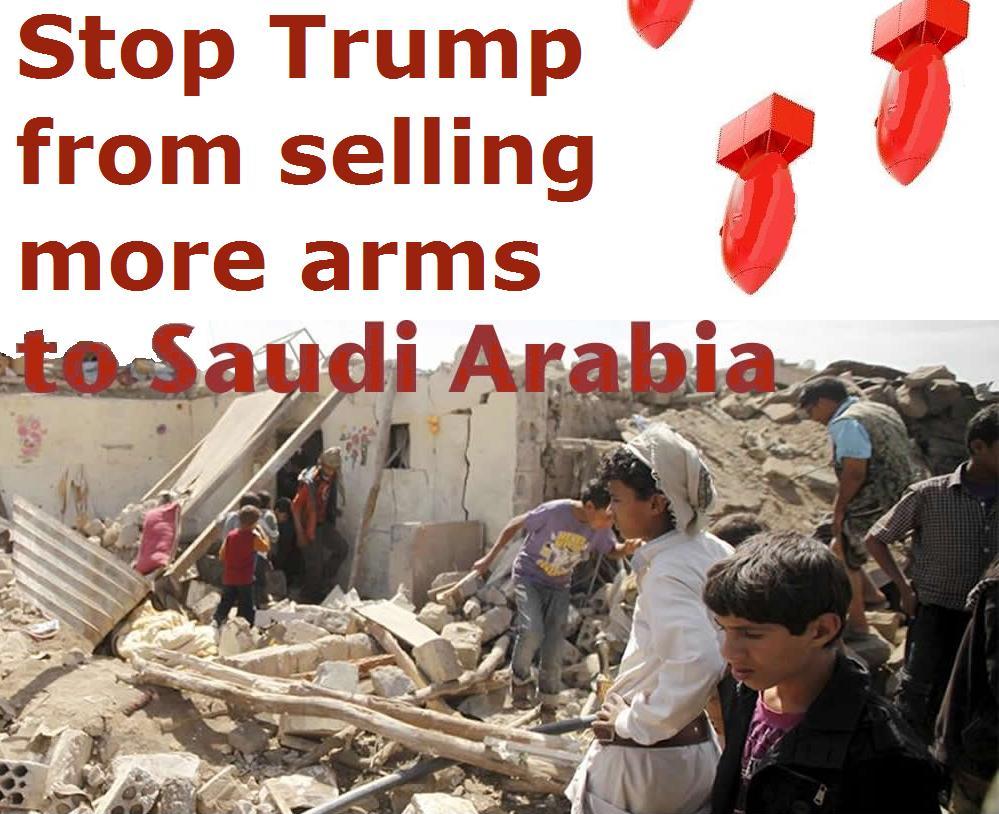
Photo of a school in Yemen bombed by Saudi Arabian jets supplied by the U.S. and fueled in the air by the U.S. Air Force.
Tell Trump to STOP THIS CARNAGE, not fuel it! Click here.
Also participate in the CodePink email and/or phone initiative:
Click here to sign a petition, to put an end to the sanctions against Syria - their only effect is to take a terrible toll on the population, causing them to migrate! And click here to see the video by the Italian Committee to lift sanctions against Syria.
Did someone tell you that U.S. military intervention in Iraq was over? Not true: we're at it again. This time the pretext to drop bombs is "curbing ISIS" (which was created by the U.S. in the first place, to overturn al-Malaki in Iraq and then Assad in Syria, and is now out of hand.
Like what happened to "our" creature al Qaeda in Afghanistan). And the death toll continues to rise...
Write your senators and tell them: "Enough! U.S. out!! Iraq has shown it can curb ISIS by itself!"
Mailing List
Stay informed
Join the USC4P&J mailing list to stay informed on events and initiatives.

 The atrocity of war is such that it might seem misplaced to get worked up about the use in Iraq of the chemical agent White Phosphorous – now officially confirmed by the Pentagon after the RAI News24 scoop last month made further denial impossible. [see the