Eyes Wide Open Film Series, Part II
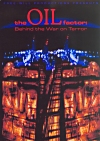
The Oil Factor: Behind the War on Terror
December 15, 2005
As our final film in the series before the holiday break, we screened The Oil Factor: Behind the War on Terror by Gerard Ungerman and Audrey Brohy. The film provides a wealth of information on the lead up to the invasion of Iraq, long before we were even aware of a lead up. (See the handout distributed at the screening)
The film gives us background information on the Project for a New American Century (PNAC), the DC based think tank promoting U.S. economic and military dominance. This organization, whose founding members include Dick Cheney and Donald Rumsfeld, has been pushing for removal of Saddam from office since it was founded in 1997, and wrote an open letter to then President Bill Clinton expressing their views.
The film includes interviews with a member of PNAC who makes some interesting statements. He claims that Iraq's huge oil reserves had nothing to do with the invasion. "We have plenty of oil." Though he admits it was quite fortunate that we happened to invade an oil rich country.
He also went on to say that increasing funding for things such as education and health care in the United States was "penny-wise and pound-foolish. Our schools have plenty of money."
In contrast we heard from retired USAF Colonel Karen Kwiatkowski who was working at the Pentagon in the lead up to the invasion. She talks about some of the underlying reasons for the urgency to take out Saddam, such as Saddam's decision to switch from the dollar to the Euro.
She also talked about the push to lift sanctions, a move which would have flooded Iraq with European and Asian contractors. Aside from the fact the U.S. would have been cut out of any contracts since they'd been bombing the country for years, there was also the issue of no longer being in a position to attack Iraq. They couldn't very well bomb the country if there were Europeans living and working there.
The maps superimposing locations of U.S. foreign military bases on the world's largest oil and gas producing regions were quite telling. As were the maps of proposed pipeline construction, with forethought given to keeping the oil out of the hands of competing nations such as China, Russia and India.
The film also includes an interview with Michael C. Ruppert, editor of From the Wilderness, who talks about how oil has become an indispensable part of our everyday lives. He gives the example of agriculture in which oil driven machines or petroleum or gas based chemicals are a fundamental part of the process so that for every calorie of food we eat, about 10 calories of hydrocarbon energy are consumed (note: this is an average, the rate is much higher for some foods. For beef it is 35 to 1, pork 68 to 1. See the article The SUV in the Pantry on Solar Today).
As this was our final film before the holiday break, we decided to have a brindisi with wine and food rather than our usual post film discussion. In hindsight, perhaps this wasn't the best idea. Though it is always nice to chat and get to know each better, this particular film brought up a number of interesting issues that warranted further discussion.
We did, of course, talk about the film and the consensus was a very definite "thumbs up."
If you haven't seen this film, we highly recommend it. See the official site to purchase the DVD: www.theoilfactor.com.
Stephanie Westbrook
Special thanks to Linux Club for their hospitality.
Our Eyes Wide Open Film Series is suspended; for further information click here.
Upshot of our Nov. 9th group discussion on current politics:
It wasn't the Russians that got us Trump. Or Comey. Or even the massive GOP election fraud. It was the DNC.* *Dem National Committee
To learn how to stop the DNC
from delivering us another Trump, read Autopsy: the Democratic Party in Crisis.
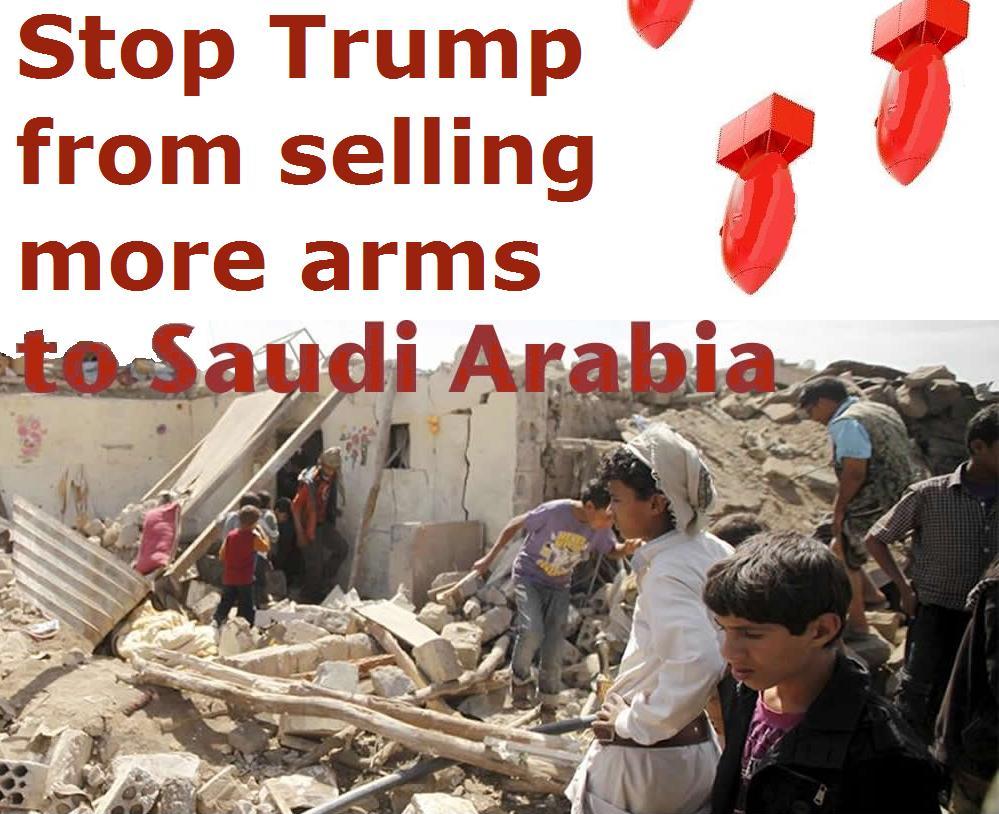
Photo of a school in Yemen bombed by Saudi Arabian jets supplied by the U.S. and fueled in the air by the U.S. Air Force.
Tell Trump to STOP THIS CARNAGE, not fuel it! Click here.
Also participate in the CodePink email and/or phone initiative:
Click here to sign a petition, to put an end to the sanctions against Syria - their only effect is to take a terrible toll on the population, causing them to migrate! And click here to see the video by the Italian Committee to lift sanctions against Syria.
Did someone tell you that U.S. military intervention in Iraq was over? Not true: we're at it again. This time the pretext to drop bombs is "curbing ISIS" (which was created by the U.S. in the first place, to overturn al-Malaki in Iraq and then Assad in Syria, and is now out of hand.
Like what happened to "our" creature al Qaeda in Afghanistan). And the death toll continues to rise...
Write your senators and tell them: "Enough! U.S. out!! Iraq has shown it can curb ISIS by itself!"
Mailing List
Stay informed
Join the USC4P&J mailing list to stay informed on events and initiatives.