Eyes Wide Open Film Series, Part II
Wal-Mart: The High Cost of Low Price
November 17, 2005
The week of November 13-19th, 2005 was the premiere week for the latest
Robert Greenwald documentary film, "Wal-Mart: The High Cost of Low
Price", with over 7,000 showings (see Greenwald's blog about the premiere week). The Eyes Wide Open film
series was able to be a part of this concerted effort by showing the
film at the Linux Club on Thursday, November 17th of that week.
Following are examples of the concerns that this documentary expresses
about Wal-Mart:
Wal-Mart Does Not Pay a Livable Wage
Nearly 10,000 workers with Arkansas' nine largest employers receive public welfare for themselves
and their families, according to the state Department of Human
Services. Wal-Mart Stores Inc., with 3,971 of its 45,106 employees on
public assistance, topped the list.” Source: Brian Baskin, “Top 9
Employers in State Have 9,698 Getting Public Aid,” Arkansas
Democrat-Gazette, March 17, 2005.
Wal-Mart Does Not Provide Either Adequate or Affordable Health Care Coverage Retail giant Wal-Mart tops the list of companies in Alabama
whose employees have children on Medicaid, the [Montgomery] Advertiser
reported, citing state records. Wal-Mart workers' children account for
3,864 children on the Medicaid rolls at a cost between $5.8 million and
$8.2 million." Source: Associated Press, “Wal-Mart No. 1 in Employee
Medicaid,” Decatur Daily, February 23, 2005
Wal-Mart Discriminates Against Women and Minorities Incidents of
discrimination or harassment by both race and gender has also been
reported in depositions taken from several other women involved in
Dukes v. Wal-Mart Stores, the class-action sex discrimination lawsuit
in which Edith Arana is a plaintiff.
Wal-Mart Abuses The Environment Connecticut Attorney General Richard Blumenthal
and Department of Environmental Protection (DEP) Commissioner Gina
McCarthy announced a $1.15 million settlement with Wal-Mart
involving environmental violations at 22 stores related to storm water
and other water management issues." Source: Press Release, CT Attorney
General's Office, August 15, 2005
Wal-Mart Actively Prevents the Formation of Unions Sample Budget: $7,000 anti-union camera package per store; $30,000 undercover
spy van per store; $100,000, 24 hour anti-union hotline; $7,000,000,
Rapid response team with corporate jet. Source: Data provided to the
producers by Stan Fortune, former manager and 17-year employee of
Wal-Mart, and Jeff Fielder, Food and Allied Service Trades, AFL-CIO
Wal-Mart Causes Lost Sales For Local Businesses
A study of small
and rural towns in Iowa showed lost sales for local businesses ranging
from -17.2% in small towns to -61.4% in rural areas, amounting to a
total dollar loss of $2.46 Billion over a 13-year period. In Iowa,
retail businesses in several categories experienced a decline of up to
59% over a 13-year period. Source: Kenneth Stone, "Impact of the
Wal-Mart Phenomenon on Rural Communities In Iowa", University of Iowa,
1997
Over forty people attended the film (in a space for 28!) and nearly a third stayed for
the discussion
after. The question that was posed to start the discussion was: Why then
with so many documented reasons to keep Wal-Mart out of small communities
is the fight to do so, so difficult and often times not successful?
Our Eyes Wide Open Film Series is suspended; for further information click here.
Upshot of our Nov. 9th group discussion on current politics:
It wasn't the Russians that got us Trump. Or Comey. Or even the massive GOP election fraud. It was the DNC.* *Dem National Committee
To learn how to stop the DNC
from delivering us another Trump, read Autopsy: the Democratic Party in Crisis.
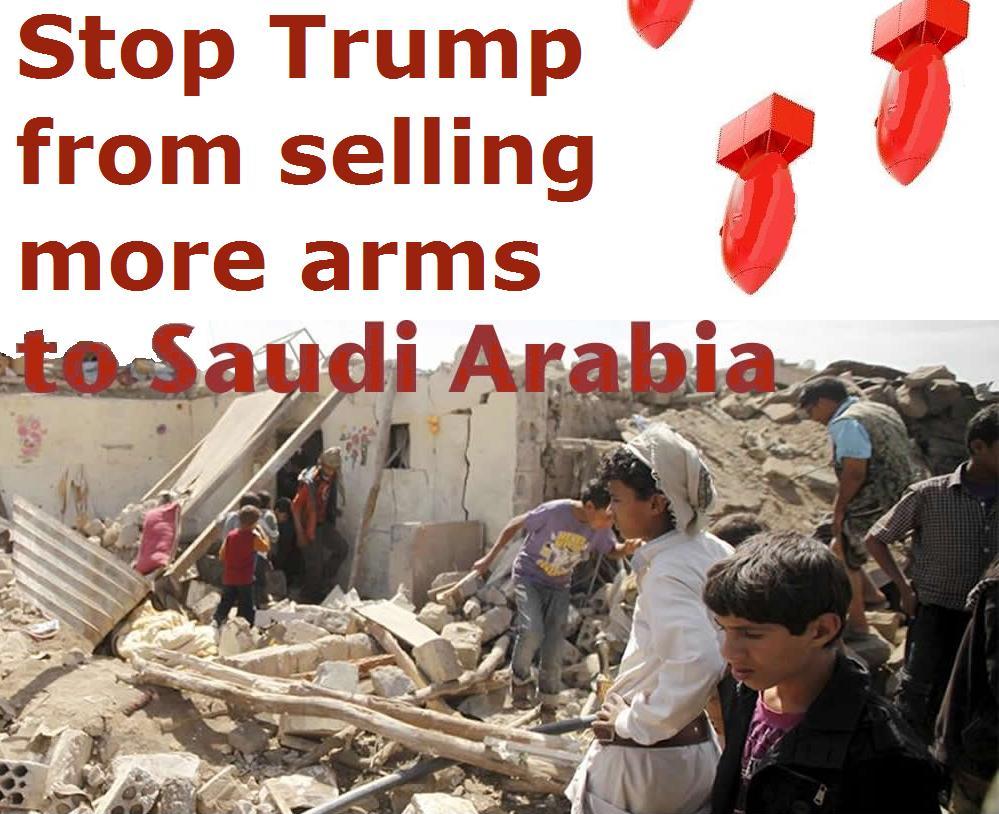
Photo of a school in Yemen bombed by Saudi Arabian jets supplied by the U.S. and fueled in the air by the U.S. Air Force.
Tell Trump to STOP THIS CARNAGE, not fuel it! Click here.
Also participate in the CodePink email and/or phone initiative:
Click here to sign a petition, to put an end to the sanctions against Syria - their only effect is to take a terrible toll on the population, causing them to migrate! And click here to see the video by the Italian Committee to lift sanctions against Syria.
Did someone tell you that U.S. military intervention in Iraq was over? Not true: we're at it again. This time the pretext to drop bombs is "curbing ISIS" (which was created by the U.S. in the first place, to overturn al-Malaki in Iraq and then Assad in Syria, and is now out of hand.
Like what happened to "our" creature al Qaeda in Afghanistan). And the death toll continues to rise...
Write your senators and tell them: "Enough! U.S. out!! Iraq has shown it can curb ISIS by itself!"
Mailing List
Stay informed
Join the USC4P&J mailing list to stay informed on events and initiatives.